When the bright studio lights of Saturday Night Live illuminated the mock debate stage in late October 2016, millions of weary Americans were desperately seeking a collective release valve from the unrelenting pressure cooker of the presidential election.
The venerable sketch comedy institution had fully transformed itself into the nation’s premier political funhouse mirror, capturing the zeitgeist of a deeply polarized society with ruthless precision.
This particular cold open, lampooning the third and final presidential debate between Donald Trump and Hillary Clinton, stood as a towering testament to the show's resurgent comedic dominance during a wildly unpredictable news cycle.
Alec Baldwin had already cemented his highly exaggerated, critically acclaimed portrayal of Donald Trump as an undeniable cultural phenomenon that transcended late-night television.
Opposite him, Kate McKinnon’s intensely calculated, perpetually striving version of Hillary Clinton offered the perfect theatrical foil, embodying the exhausting burden of a lifetime spent preparing for this exact moment.
This nine-minute opening sketch was not merely another routine political spoof designed for cheap laughs before the opening credits rolled.
It was a meticulously crafted dissection of the chaotic final clash before voters headed to the polls, expertly capturing the surreal essence of a race that frequently felt stranger than the most outlandish fiction.
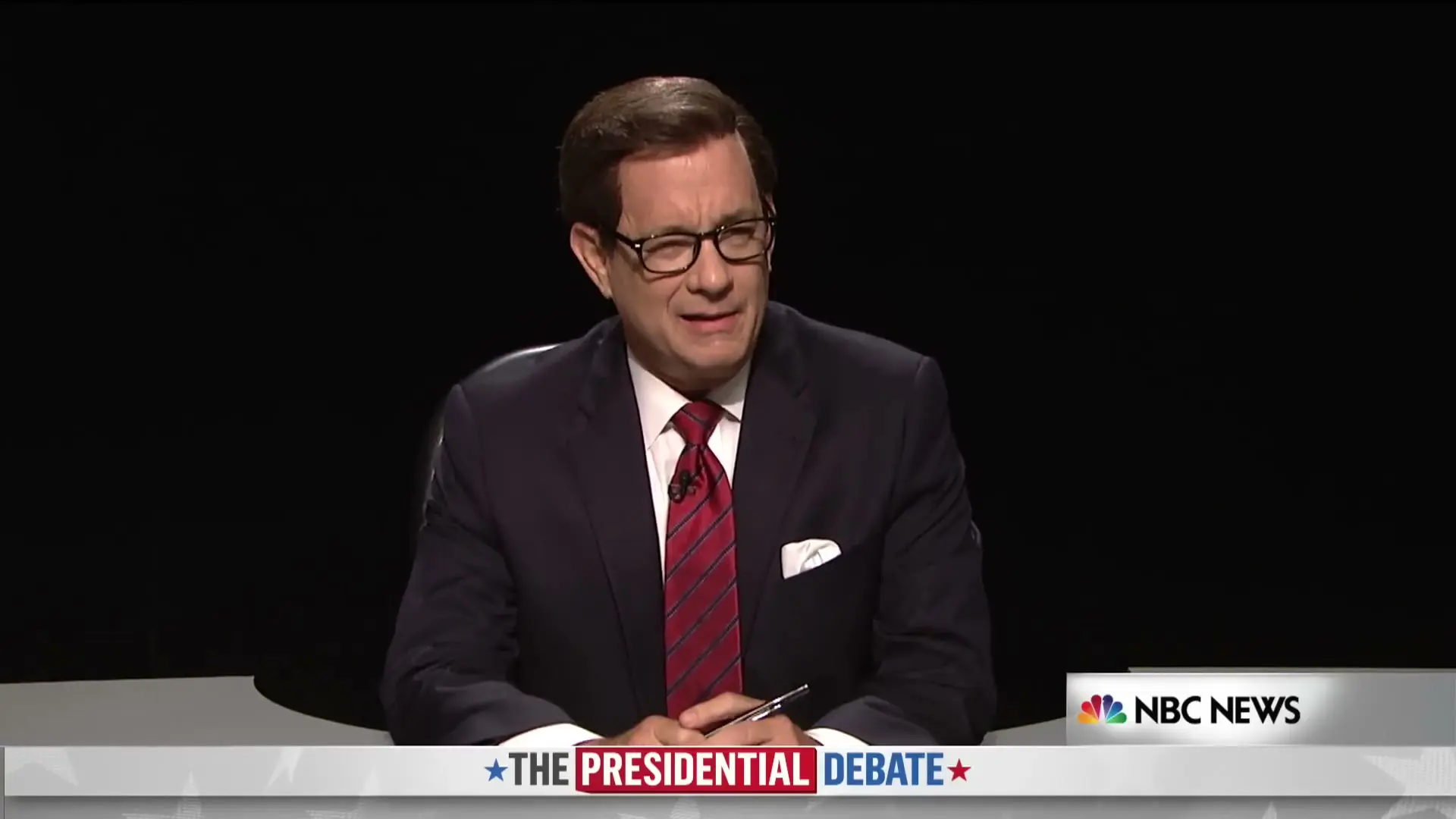
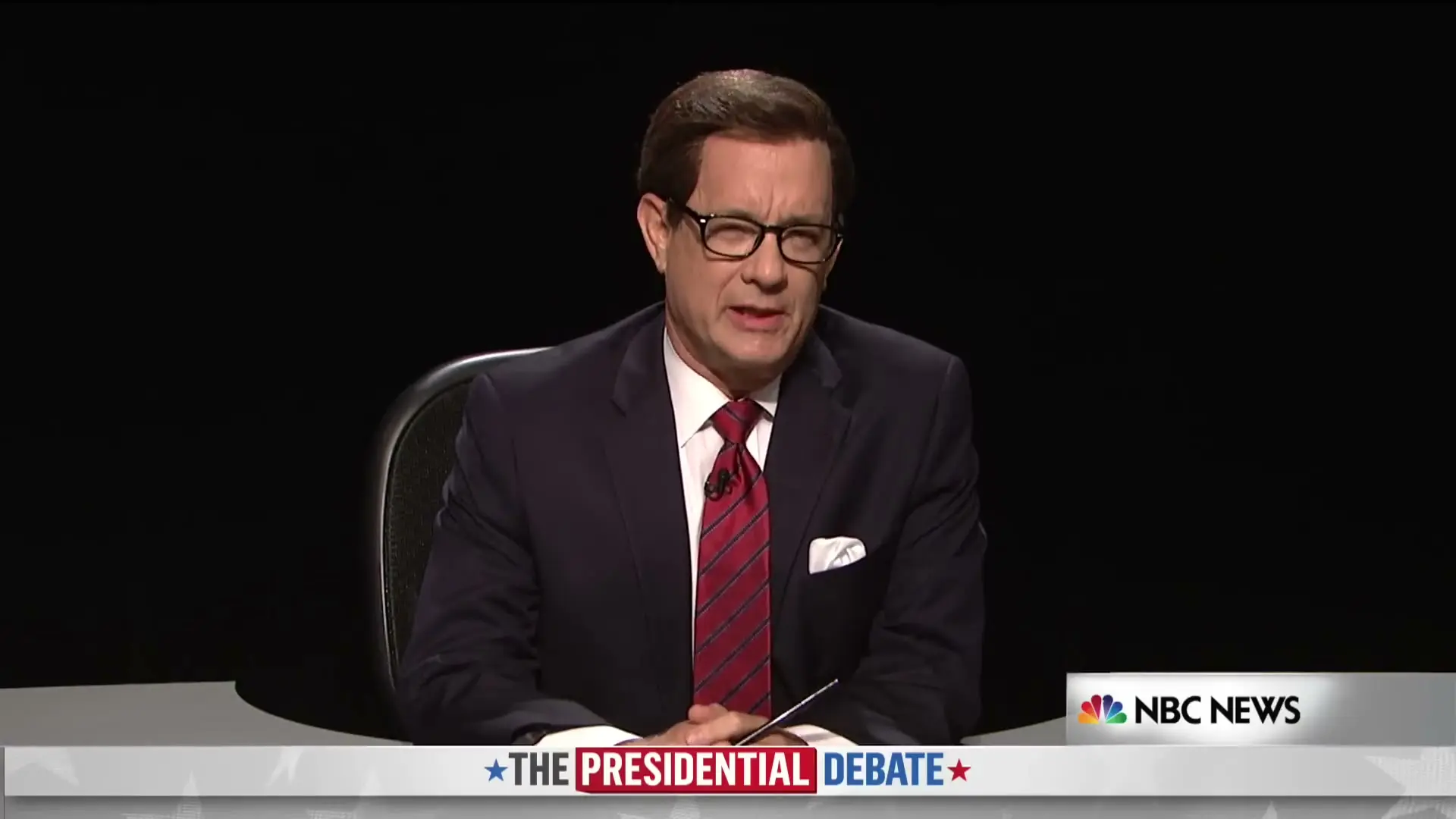
Beloved actor Tom Hanks stepped onto the stage in the sensible shoes of Fox News anchor Chris Wallace, anchoring the sheer absurdity of the moment with a flawless deadpan delivery that only amplified the surrounding comedic chaos.
The studio audience practically buzzed with electric anticipation the very second the two candidates took their places at their respective wooden podiums.
Everyone watching knew that the brilliant writers' room at SNL had been handed an absolute goldmine of bizarre, unprecedented real-world soundbites to play with over the previous seventy-two hours.
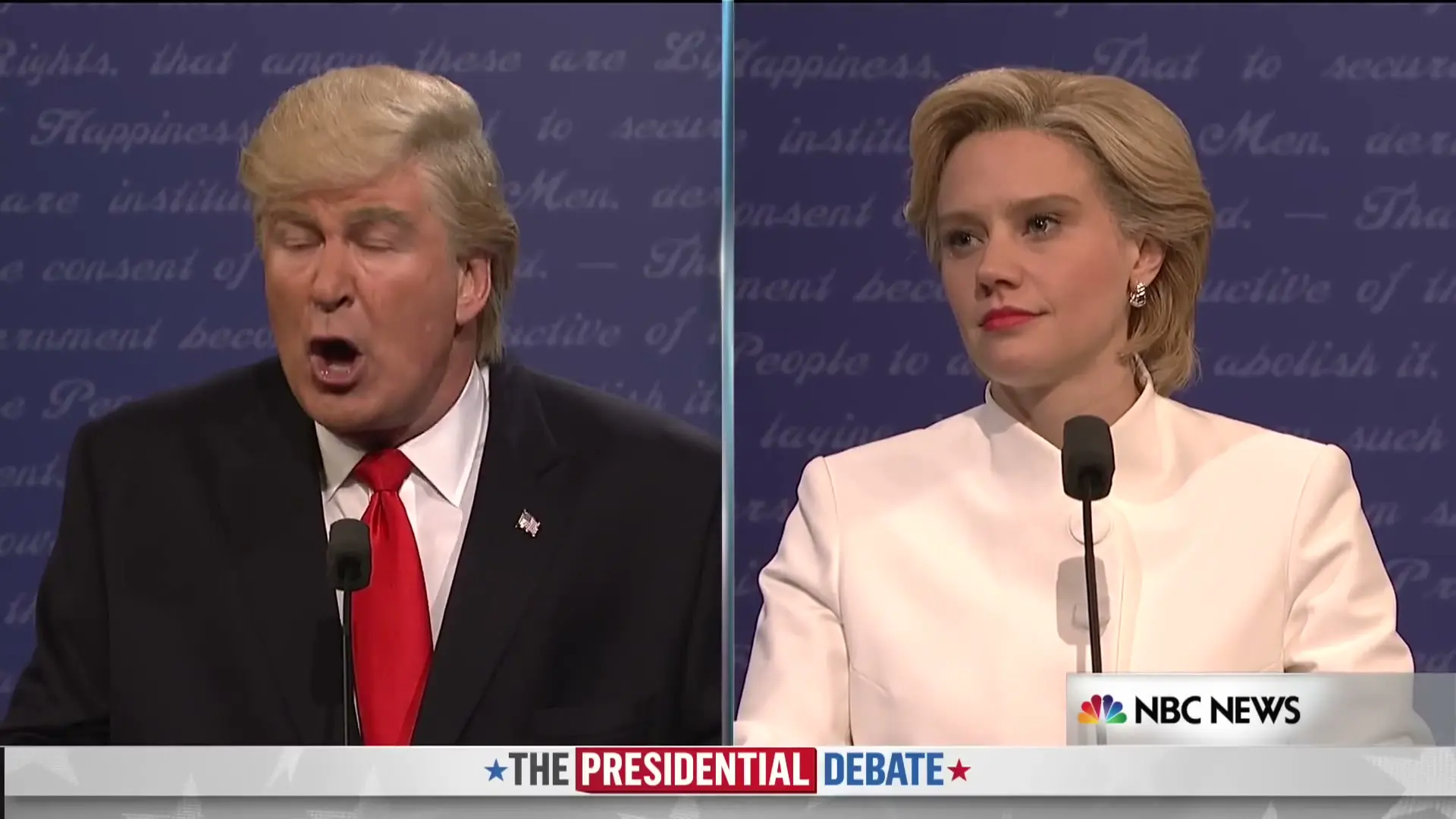
Baldwin’s Trump immediately commanded the room's attention with his signature pursed lips, dramatically squinting eyes, and a looming physical presence that seemed to challenge the very laws of gravity.
He projected an inflated, almost cartoonish confidence that dared anyone, especially the moderator, to challenge his uniquely constructed alternative reality.
McKinnon’s Clinton countered this chaotic energy with a rigid, almost robotic posture and a wide-eyed intensity that bordered on the delightfully maniacal.
She looked exactly like a highly stressed high school valedictorian who had studied endlessly for a crucial final exam, only to discover it was suddenly being administered in a completely foreign language.
The underlying comedic tension snapped early in the sketch when the deeply serious topic of border security and immigration inevitably arose on the debate floor.
It was here that Baldwin delivered the now-infamous, racially charged phrase bad hombres with a level of total, unironic conviction that perfectly mirrored the real candidate's actual debate performance.
In any normal, conventional political era, a presidential nominee using such a bizarre remark on national television would dominate the serious news cycle and prompt endless pundit hand-wringing for weeks on end.
But SNL brilliantly recognized and captured the deep exhaustion of the American electorate by choosing to turn this shocking rhetorical moment into a literal, brightly colored game.
McKinnon’s Clinton did not bother to feign moral outrage or launch into a heavily rehearsed, finger-wagging monologue about the sanctity of core American values.
Instead, her eyes suddenly lit up with a terrifying, undeniable glee as she whipped out a massive, oversized Bingo card from a hidden compartment behind her podium.
She triumphantly stamped a square on the card with aggressive force, gleefully screaming out to the audience that she had finally hit the jackpot on her highly customized board.
The board was hilariously populated with Trump's most predictable, inflammatory catchphrases, and she celebrated checking off this specific slur as if she had just won a massive lottery jackpot.
The studio audience erupted at this brilliant visual gag because it perfectly encapsulated how millions of voters across the country had resorted to cynical drinking games and satirical bingo cards just to survive the grueling, mud-slinging debate season.
It was a moment of pure, transcendent physical comedy that temporarily broke the suffocating high-stakes tension of the election season.
More importantly, it established McKinnon’s version of Clinton as a highly intelligent but slightly unhinged candidate who was desperately trying to gamify the unpredictable political hurricane standing just a few feet away from her.
However, the seasoned SNL writers were absolutely not content to simply skewer the controversial Republican nominee while giving the Democratic frontrunner a free pass.
They aimed their sharp, satirical scalpel with equal precision and ruthlessness at Clinton’s well-documented, widely criticized tendency to dodge difficult questions through highly elaborate rhetorical gymnastics.
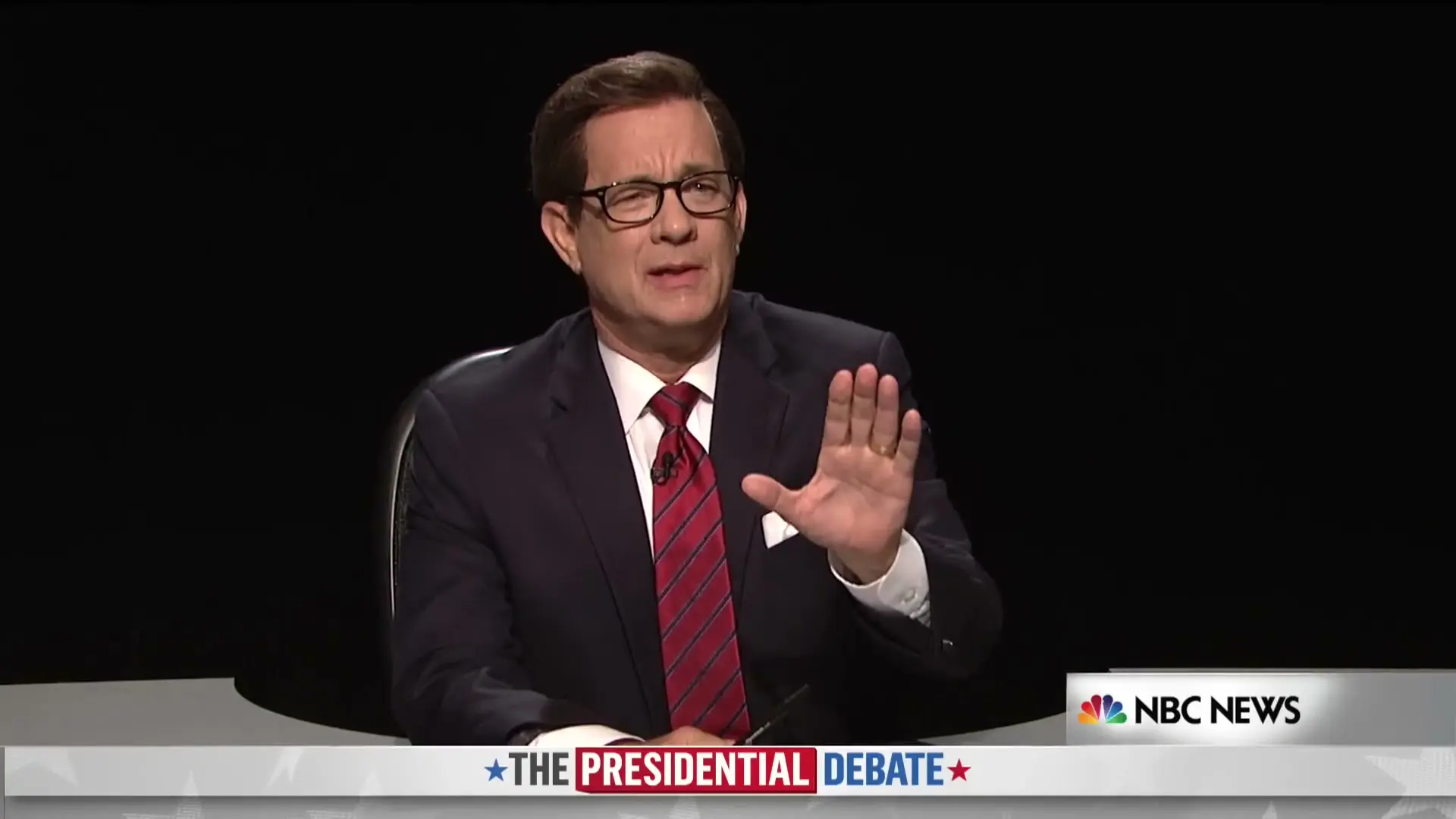
When Tom Hanks, flawlessly channeling the stern, no-nonsense persistence of the real-life Chris Wallace, pressed Clinton on the highly damaging revelations emerging from the Wikileaks email dump, the sketch found another gear entirely.
Facing a legitimate, headline-dominating scandal that genuinely threatened to derail her carefully managed campaign narrative, McKinnon’s Clinton deployed a defense mechanism that was as uproariously funny as it was painfully transparent.
As the dreaded word emails hung in the tense studio air, she suddenly seemed to lose all function in her ears, tilting her head and squinting her eyes in a brilliant pantomime of technical difficulties.
She acted as if the moderator's microphone had mysteriously and conveniently cut out at the exact, precise moment she was asked to publicly account for her digital controversies.
With masterful comedic timing that demonstrated exactly why she had won an Emmy, McKinnon executed a political pivot so incredibly sharp it practically left burning skid marks on the glossy studio floor.
She seamlessly and breathlessly maneuvered the conversation away from the treacherous waters of cybersecurity and directly into a passionate, fiery condemnation of Trump's horrific track record with women.
The sheer, unadulterated audacity of this massive pivot, performed with a completely straight face and an air of wounded innocence, laid bare the heavily rehearsed evasion tactics that frustrated even her most ardent, loyal supporters.
It was a surgical, deeply insightful strike by the comedy writers, acknowledging the very valid criticisms of the Democratic nominee while expertly maintaining the relentless, rapid-fire pacing of the late-night sketch.
Yet, McKinnon’s unforgettable portrayal was never solely about highlighting the former Secretary of State's undeniable political flaws and public relations missteps.
It was equally about leaning into the surreal, almost tragicomic nature of her grueling, decades-long, heavily scrutinized pursuit of the highest elected office in the land.
During a specific segment where she was directly prompted by the moderator to discuss her vast qualifications for the presidency, the sketch morphed into something entirely different.
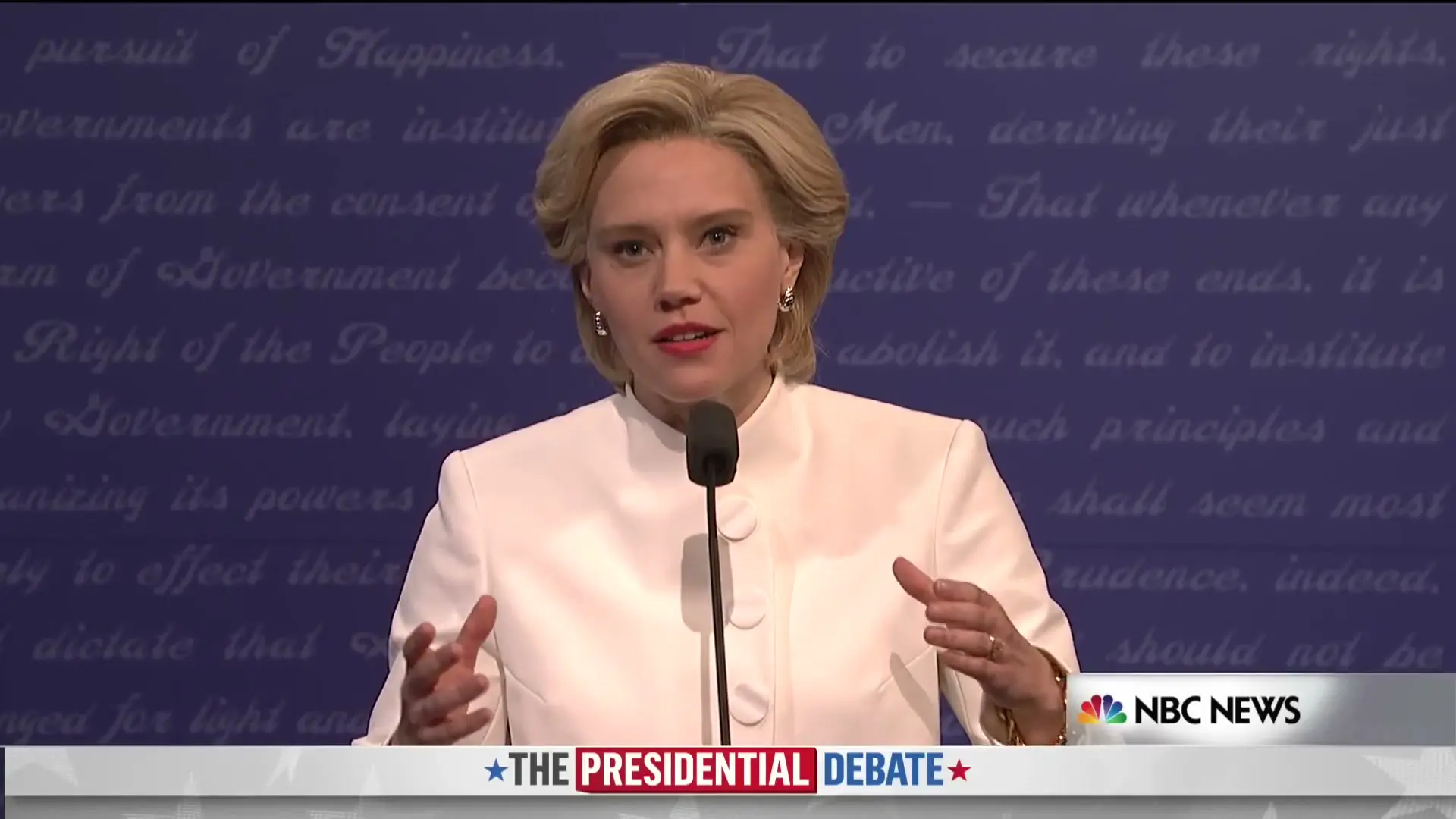
It became a surreal, highly intense victory lap for a seasoned candidate who could acutely feel the ultimate prize threatening to slip through her heavily manicured fingers.
She launched into a breathless, intensely focused, rapid-fire recitation of her impressive thirty-year career in the grueling, often thankless trenches of public service.
Her voice began to steadily rise in pitch and volume with every single legislative achievement, diplomatic milestone, and hard-fought political battle she aggressively rattled off to the audience.
The absolute crescendo of this incredibly boastful, ego-driven monologue arrived when she finally brought up the highly classified military operation that resulted in the permanent elimination of the world's most wanted terrorist.
Shedding every single ounce of her carefully curated, heavily focus-group-tested senatorial decorum, McKinnon suddenly roared the name of Osama Bin Laden directly into her microphone.
She delivered the dead terrorist's name with the raw, guttural, explosive energy of a hardcore heavy metal frontman hyping up a sold-out stadium crowd right before a massive guitar solo.
The sheer, shocking unexpectedness of this visceral, aggressive scream, contrasting wildly with her pristine white pantsuit and perfectly coiffed blonde hair, sent the live studio audience into absolute hysterics.
It brilliantly captured the underlying, palpable desperation of a highly qualified, deeply experienced candidate who simply could not understand why her extensive, unmatchable resume wasn't enough to secure a comfortable landslide victory.
Meanwhile, on the opposite side of the stage, Baldwin’s Trump remained a terrifyingly accurate perpetual motion machine of rude interruptions, defensive deflections, and bizarre personal insults.
He perfectly mimicked the real-life Republican candidate's exhausting strategy of relentless, unapologetic rhetorical assault that had thoroughly demolished a dozen primary opponents.
The sketch reached one of its most memorable, culturally significant peaks when Baldwin menacingly leaned into his microphone, narrowed his eyes, and dropped the now-iconic phrase nasty woman.
This was a direct quote from the actual, real-life debate that had instantly ignited the internet, spawned a million angry hashtags, and infuriated millions of women across the globe.
In the real world outside of Studio 8H, the off-the-cuff sexist comment had sparked genuine outrage and mobilized feminist voters who were deeply tired of the candidate's toxic rhetoric.
But in the heightened, heavily satirical reality of Saturday Night Live, it was instantly transformed into a brilliant punchline about the deeply cynical nature of the modern political grift.
Without missing a single, solitary beat, McKinnon’s unflappable Clinton seized the sexist insult not as a deep personal slight, but as a golden, unparalleled marketing and merchandising opportunity.
She looked directly into the camera lens with the impossibly polished, eager smile of a veteran QVC television host who knows exactly how to close a high-stakes sale.
She immediately began shamelessly hawking limited-edition, commemorative ceramic mugs boldly emblazoned with the Nasty Woman slogan to the millions of viewers watching at home.
This brilliant, lightning-fast improvisational pivot highlighted the dizzying, terrifying speed at which serious political controversies are commodified and packaged in the modern digital age.
It showed exactly how a deeply misogynistic jab could be efficiently turned into a highly lucrative fundraising mechanism before the debate broadcast was even officially over.
The audience's massive roar of laughter carried a heavy note of self-awareness and recognition, acknowledging that they too were active participants in a bizarre political ecosystem where outrage is almost immediately converted into branded merchandise.
As the epic mock debate finally drew toward its highly anticipated conclusion, the comedic stakes expertly mirrored the very real, existential anxiety hanging like a dark cloud over the democratic process itself.
Tom Hanks pushed his wire-rimmed glasses up his nose, perfectly embodying the weary, institutional voice of the fading American establishment.
He looked directly at the Republican nominee and demanded that Trump explicitly, unequivocally promise to accept the final, certified results of the upcoming November election.
The studio grew noticeably, uncomfortably quieter for a brief second, hanging on the terrifying precipice of a joke that felt uncomfortably close to a potential constitutional crisis.
Baldwin masterfully let the silence stretch out, his heavily bronzed face contorting into a familiar mask of petulant defiance and deeply ingrained, childish stubbornness.
He looked like a man actively weighing the fundamental, centuries-old tenets of a peaceful transfer of power against the fragile demands of his own massive, unprecedented ego.
When he finally deigned to speak, his refusal to commit to democracy was wrapped in a brilliantly absurd, hilariously stubborn caveat that completely derailed the serious moderator's entire line of questioning.
The sudden, ridiculous, entirely self-serving condition he attached to his potential acceptance of the election results completely shattered the heavy tension in the room.
It allowed the deeply anxious studio audience to finally release their collective breath in a massive, cathartic roar of genuine, relieved laughter.
It was the absolute perfect encapsulation of exactly why this specific era of Saturday Night Live resonated so deeply with millions of terrified, thoroughly exhausted viewers.
The talented cast and crew managed to consistently take the absolute darkest, most anxiety-inducing moments of a grueling political news cycle and process them into easily digestible, highly cathartic comedy.
Baldwin and McKinnon did not just put on funny wigs to do cheap, surface-level impersonations of two historically unpopular politicians yelling at each other on a stage.
They fully embodied the opposing, deeply rooted anxieties of a heavily divided nation that felt like it was teetering on the absolute edge of a collective nervous breakdown.
Every single facial twitch, every clever hidden prop, and every perfectly timed rhetorical pivot served to document a surreal moment in American history when serious politics finally and fully merged with cheap reality entertainment.
Looking back at that masterful third debate cold open years later, it stands as a perfect, glittering time capsule of a fractured country laughing straight through its overwhelming nerves.
It captures a nation trying desperately, and somewhat successfully, to find genuine humor in a terrifying, high-stakes political showdown that would ultimately alter the course of global history forever.
The final curtain would soon fall on the brutal 2016 campaign, plunging the country into a chaotic new reality, but the brilliant echoes of that Saturday night laughter would linger long after the final, shocking votes were tallied.
Watch full video here: